MINING STRATEGY
How we'll mine Tivani
Tivani is a conventional open-pit operation. There's nothing experimental about it, the orebody sits at surface, the method is well understood, and we'll use proven equipment in a sequence that's been used at projects like this for decades.
What's different is the orebody itself: 471 million tonnes of titaniferous magnetite, mineable economically across three commodities: titanium, iron and vanadium, from a single pit. The mining strategy is built around getting that ore out predictably, and at a cost that lets each of those three product streams stand on its own.

Contractor-led, by design
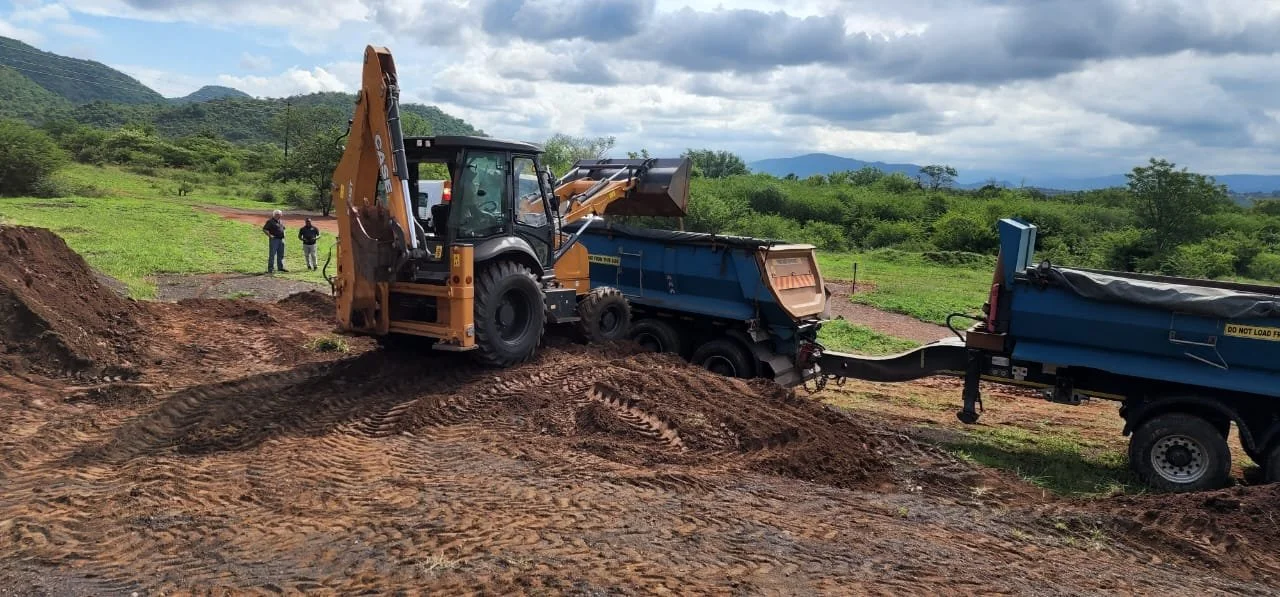
We're running the mining through a contracted services provider rather than building an in-house fleet. For a project at this stage, it's the right call. It keeps initial capex down, transfers day-to-day operational risk to a specialist, and lets our own team stay focused on the things that actually drive Tivani's economics: grade control, plant feed, and sequencing.
Leisitele
The mining sequence
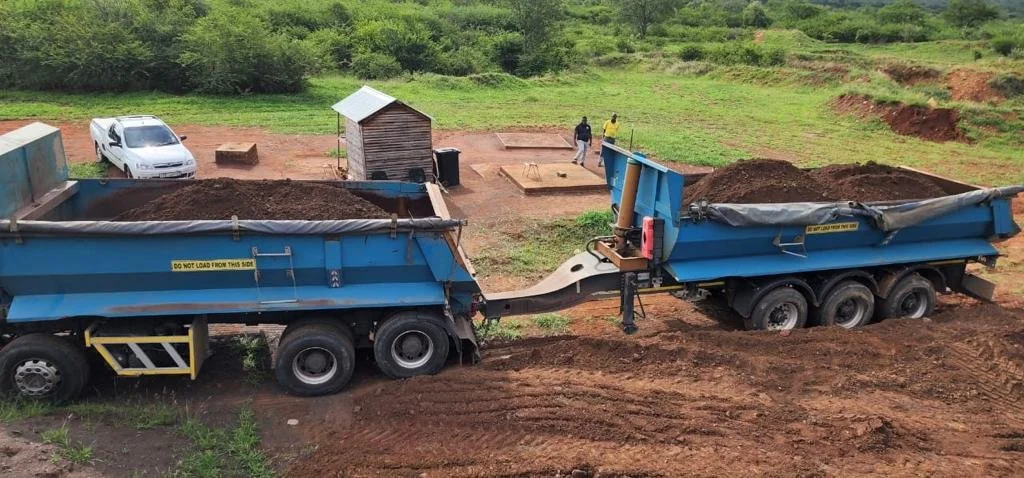
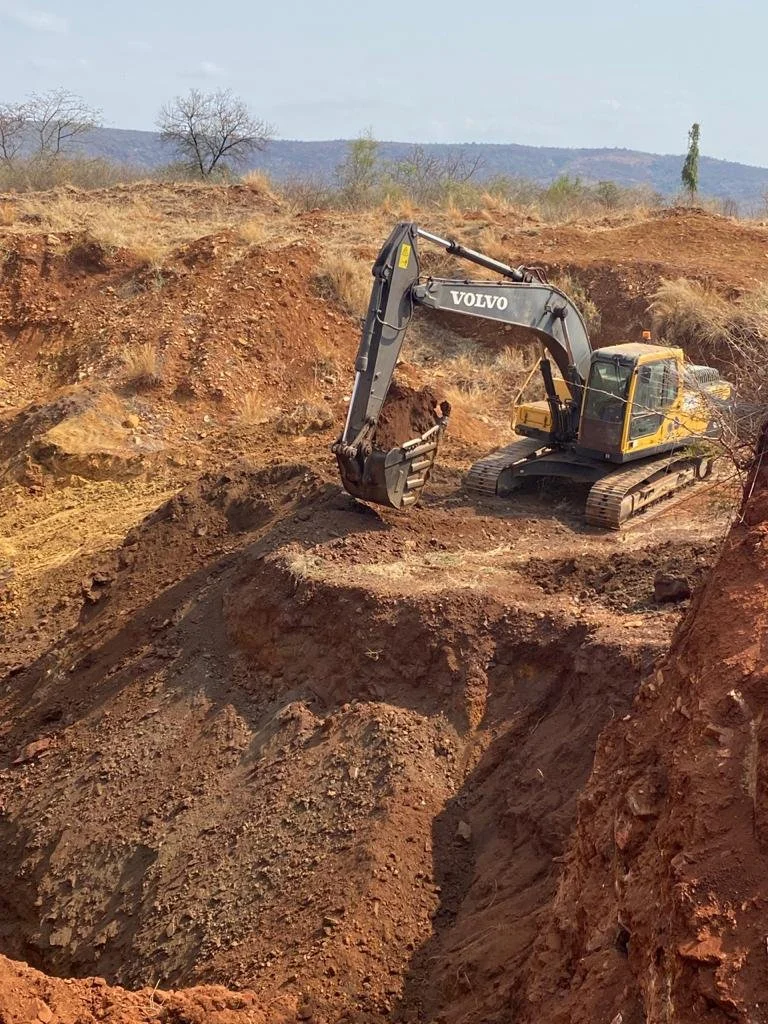
The orebody is shallow. The top 25 to 40 metres is weathered material that comes out without blasting, an excavator strips it, haul trucks move it. Below the weathering, the fresh rock needs drill-and-blast.
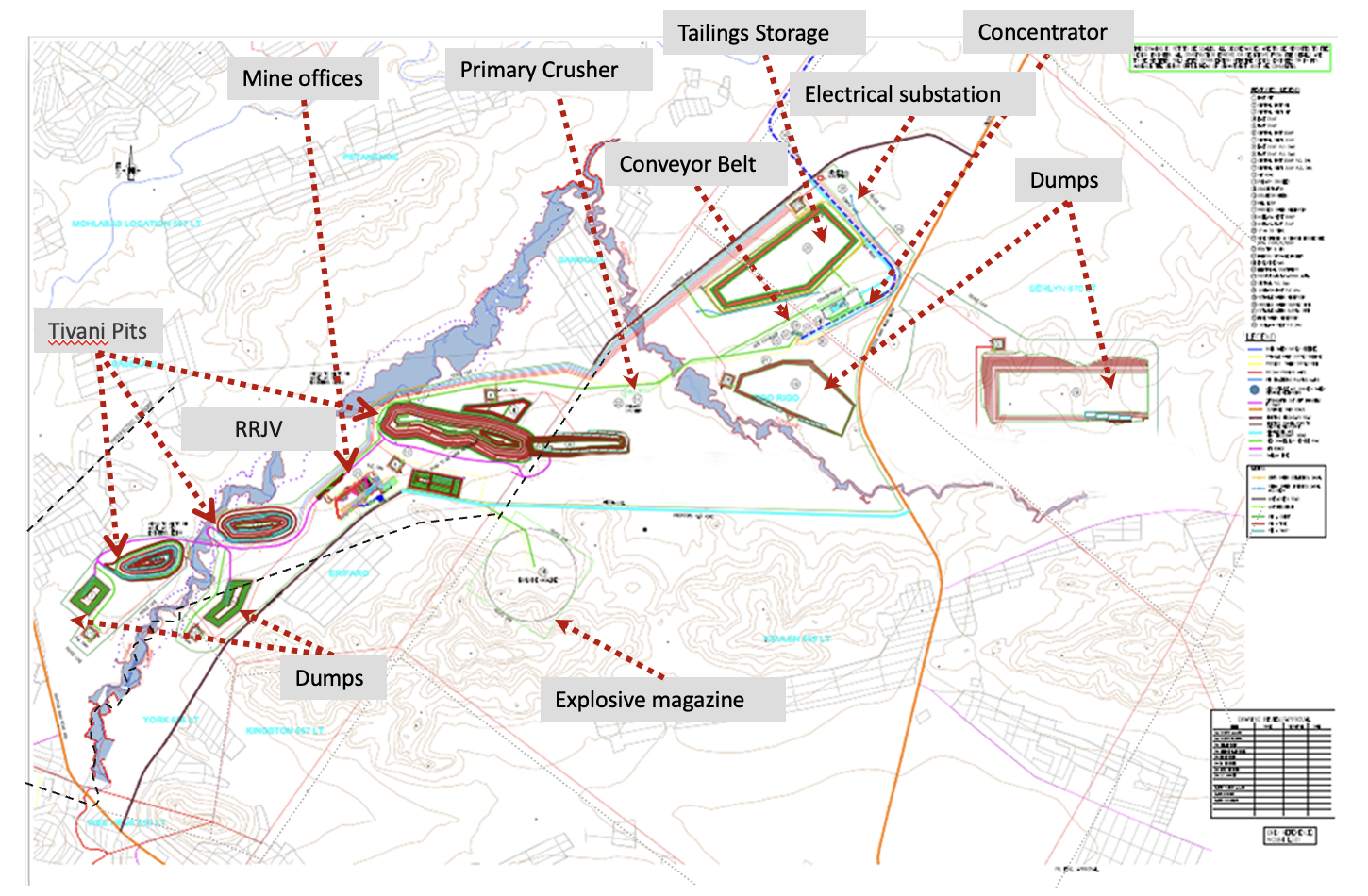
The sequence from there is standard. Blast holes drilled on a designed pattern, charged, fired. Broken rock loaded out by excavator into haul trucks. Ore routed to the primary crusher and onward into the concentrator. Waste routed to designated rock dumps near the pits, where haul distances are kept short.
Strip
Drill & blast
Load
Haul
Feed
Pit phasing
Tivani's production schedule and mine plan are built off a pit optimisation model. The phasing is designed to maintain a lower stripping ratio for as long as possible — by extracting ore along the strike of the orebodies first, before deepening the pits.
That's the whole principle. Take the ore that's nearest the surface first, push the deeper material into later years of the mine life.
Tivani Long term mine layout